Las noticias de IA y cloud que importan, directo de la fuente
Una curaduría de los anuncios más relevantes de Microsoft, OpenAI, AWS, Google y el mercado de IA - título, resumen e imagen siempre extraídos del material original de cada empresa, con enlace a la fuente. Suscríbase para recibir las próximas por correo.
Reciba las próximas por correo
La misma curaduría de arriba, directo a su bandeja de entrada. Sin spam, sin venta de listas - cancele cuando quiera, con un clic.
Top announcements of the AWS Summit in New York, 2026 | Amazon Web Services
A recap of the top announcements from AWS
Leer en el sitio original
Announcing Web Search on Amazon Bedrock AgentCore: Ground your AI agents in current, accurate web knowledge | Amazon Web Services
AWS introduces Web Search on Amazon Bedrock AgentCore, a fully managed tool that enables agents to ground responses in current, cited web knowledge with zero data egress from customer
Leer en el sitio original
Introducing Amazon Bedrock Managed Knowledge Base for faster, more accurate enterprise AI applications | Amazon Web Services
Amazon Bedrock
Leer en el sitio original
Achieving success with AI - The Official Microsoft Blog
The two most important elements in any AI solution are Intelligence + Trust. I first made this statement in November at our Ignite conference and my conviction is strengthened by every conversation I have with customers. Through my travels, three consistent topics are being raised when considering the adoption of AI solutions: Will AI amplify...
Leer en el sitio original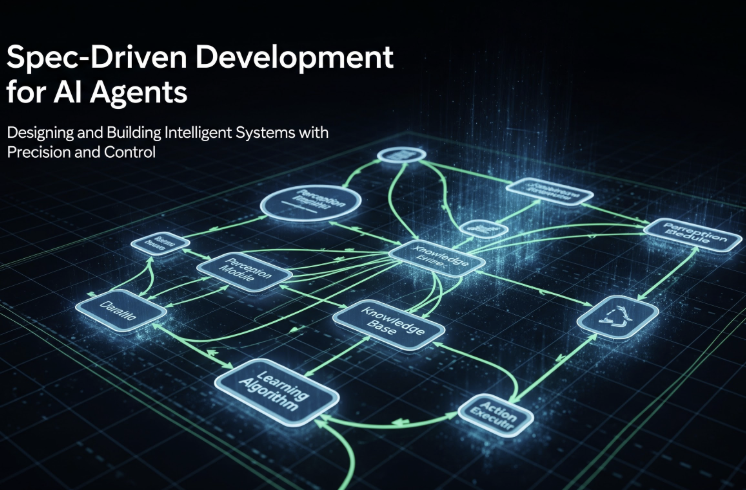
Spec-Driven Development for AI Agents: Governing Specs
Spec-driven development makes specs behavior-shaping artifacts for AI agents. At fleet scale they need versions, owners, gates, and traces - here's how.
Leer en el sitio original
AI alone won't change your business. The system running it will. - The Official Microsoft Blog
Become an AI-first enterprise with Microsoft’s agent platform.
Leer en el sitio original
Microsoft Build 2026: Be yourself at work - The Official Microsoft Blog
Platforms shift when developers build. We explore, choose tools, dream, create. This platform shift comes with more information than ever, ready at your fingertips. This shift, it’s about building fast AND THEN: it’s about building, operating, optimizing and observing. Securing your infrastructure, applications and agents in a seamless way that doesn’t slow you down from...
Leer en el sitio original
State of AI Agents
LangChain provides the engineering platform and open source frameworks developers use to build, test, and deploy reliable AI agents.
Leer en el sitio original
I/O ‘26 news for agent developers on Google Cloud | Google Cloud Blog
Following the evolution of Vertex AI into the Gemini Enterprise Agent Platform, we’re extending these capabilities directly into your local development tools. We’ll show you how Agent Platform and the new developer tools shared at I/O fit together.
Leer en el sitio original
AI Harness Engineering: A Runtime Substrate for Foundation-Model Software Agents
Foundation models have transformed automated code generation, yet autonomous software-engineering agents remain unreliable in realistic development settings. The dominant explanation locates this gap in model capability. We propose a different locus: software-engineering capability emerges from a model-harness-environment system, in which a runtime substrate -- the harness -- mediates how a foundation-model agent observes a project, acts on it, receives feedback, and establishes that a change is complete. We formalize this substrate as an AI Harness Engineering and identify eleven component responsibilities: task specification, context selection, tool access, project memory, task state, observability, failure attribution, verification, permissions, entropy auditing, and intervention recording. We operationalize the harness through a four-level ladder (H0-H3) that progressively exposes runtime support to the agent, and we propose a trace-based evaluation protocol that converts each agent run into an auditable episode package. Applied to a controlled validation task, the framework yields episode packages whose evidence structure varies systematically with harness level: lower levels produce only a final patch, higher levels produce reproduction logs, failure attributions, deterministic requirement checks, and structured verification reports. The framework reframes the central question of autonomous software engineering from whether a foundation model can produce a patch to whether the model-harness-environment system can produce a verifiably correct, attributed, and maintainable change. We outline a research program for the runtime systems that foundation-model software agents will require.
Leer en el sitio originalHarness Engineering as Categorical Architecture
The agent harness, the system layer comprising prompts, tools, memory, and orchestration logic that surrounds the model, has emerged as the central engineering abstraction for LLMbased agents. Yet harness design remains ad hoc, with no formal theory governing composition, preservation of properties under compilation, or systematic comparison across frameworks. We show that the categorical Architecture triple (G, Know, Phi) from the ArchAgents framework provides exactly this formalization. The four pillars of agent externalization (Memory, Skills, Protocols, Harness Engineering) map onto the triple's components: Memory as coalgebraic state, Skills as operad-composed objects, Protocols as syntactic wiring G, and the full Harness as the Architecture itself. Structural guarantees-integrity gates, quality-based escalation, supported convergence checks-are Know-level certificates whose preservation is structural replay: our compiler checks identity and verifier replay, not output-layer correctness or model behavior. We validate this correspondence with a reference implementation featuring compiler functors targeting Swarms, DeerFlow, Ralph, Scion, and LangGraph: the four configuration compilers preserve three named certificate types by identity or replay, and LangGraph preserves the same certificates through its shared per-stage execution path. The LangGraph compiler creates one node per stage using the same per-stage method as the native runtime, providing LangGraph-native observability without reimplementing harness logic. An end-to-end escalation experiment with real LLM agents confirms that the quality-based escalation control path is model-parametric in this two-model, one-task experiment. The result positions categorical architecture as the formal theory behind harness engineering.
Leer en el sitio original
Adversaries Leverage AI for Vulnerability Exploitation, Augmented Operations, and Initial Access | Google Cloud Blog
Explore GTIG's 2026 report on how adversaries leverage AI for zero-day exploits, autonomous malware, and industrial-scale cyber operations.
Leer en el sitio original
Multi-agent orchestration patterns and best practices - Microsoft Copilot Studio
Learn how to compose inline and connected agents, manage handoffs, and enforce guardrails to deliver modular, scalable workflows. Includes best practices for authoring agent instructions in multi-agent setups.
Leer en el sitio original
Unlocking human ambition to drive business growth with AI - The Official Microsoft Blog
As our customers progress toward becoming Frontier Firms, they are using AI not only to optimize how work gets done, but to reinvent their business on the promise of growth. Organizations can now unlock creativity, accelerate innovation and democratize intelligence by bringing Copilots and agents directly into the tools people love and use every day....
Leer en el sitio original
Introducing Gemini Enterprise Agent Platform | Google Cloud Blog
Gemini Enterprise Agent Platform is our new platform to build, scale, govern, and optimize agents. It integrates the model selection, model building, and agent building capabilities of Vertex AI, with new features for agent integration, DevOps, and orchestration, and security.
Leer en el sitio original
Welcome to Google Cloud Next26 | Google Cloud Blog
At Google Cloud Next '26, explore the Agentic Enterprise. Learn about our unified AI stack for building, scaling, and optimizing intelligent agents.
Leer en el sitio original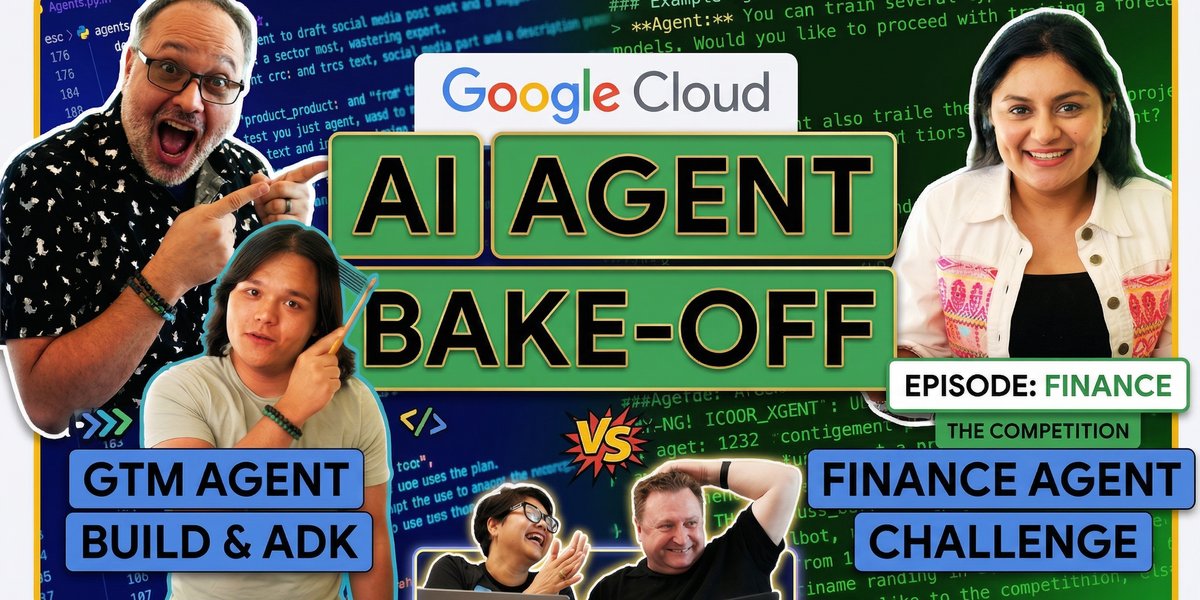
Build Better AI Agents: 5 Developer Tips from the Agent Bake-Off- Google Developers Blog
Leer en el sitio originalConfigure high-quality instructions for generative orchestration - Microsoft Copilot Studio
Learn how to write instructions for agents using generative orchestration in Microsoft Copilot Studio. Optimize agent responses and tool usage effectively.
Leer en el sitio original
Announcing Copilot leadership update - The Official Microsoft Blog
Satya Nadella, Chairman and CEO, and Mustafa Suleyman, Executive Vice President and CEO of Microsoft AI, shared the below communications with Microsoft employees this morning. SATYA NADELLA MESSAGE I want to share two org changes we’re making to our Copilot org and superintelligence effort. It’s clear a new era of productivity is emerging as AI experiences...
Leer en el sitio original
Major agentic capabilities improvements in GitHub Copilot for JetBrains IDEs - GitHub Changelog
This update brings several new features and improvements to GitHub Copilot in JetBrains IDEs. Core agentic capabilities, including custom agents, sub-agents, and plan agent, are now generally available, with agent…
Leer en el sitio original
Introducing the First Frontier Suite built on Intelligence + Trust - The Official Microsoft Blog
Today Microsoft is announcing: Wave 3 of Microsoft 365 Copilot Expanded model diversity with Claude and next-gen OpenAI models available today General availability of Agent 365 on May 1 for $15 per user General availability of the new Microsoft 365 E7: The Frontier Suite on May 1 for $99 per user1 Frontier Transformation is a...
Leer en el sitio originalAmazon Bedrock AgentCore | AWS News Blog
Leer en el sitio original
GitHub Copilot CLI is now generally available - GitHub Changelog
GitHub Copilot CLI—the terminal-native coding agent that brings the power of GitHub Copilot directly to your command line—is now generally available for all Copilot subscribers. Editor’s note (February 27, 2026):…
Leer en el sitio original
Gemini 3.1 Pro on Gemini CLI, Gemini Enterprise, and Vertex AI | Google Cloud Blog
Today, we’re announcing Gemini 3.1 Pro on Google Cloud for developers and business teams. Get started on Gemini CLI, Gemini Enterprise, and Vertex AI.
Leer en el sitio original
Managed MCP servers for Google Cloud databases | Google Cloud Blog
Learn about new Model Context Protocol (MCP) servers for AlloyDB, Spanner, Cloud SQL, Firestore and Bigtable, as well one for Developer Knowledge.
Leer en el sitio original
Harness engineering: leveraging Codex in an agent-first world
By Ryan Lopopolo, Member of the Technical Staff
Leer en el sitio originalOrchestrate agent behavior with generative AI - Microsoft Copilot Studio
Set up your Microsoft Copilot Studio agent to use generative AI to orchestrate between other agents, topics, tools, and knowledge sources.
Leer en el sitio original
Retiring GPT-4o, GPT-4.1, GPT-4.1 mini, and OpenAI o4-mini in ChatGPT
On February 13, 2026, alongside the previously announced retirement of GPT‑5 (Instant, Thinking, and Pro), we will retire GPT‑4o, GPT‑4.1, GPT‑4.1 mini, and OpenAI o4-mini from ChatGPT. In the API, there are no changes at this time.
Leer en el sitio original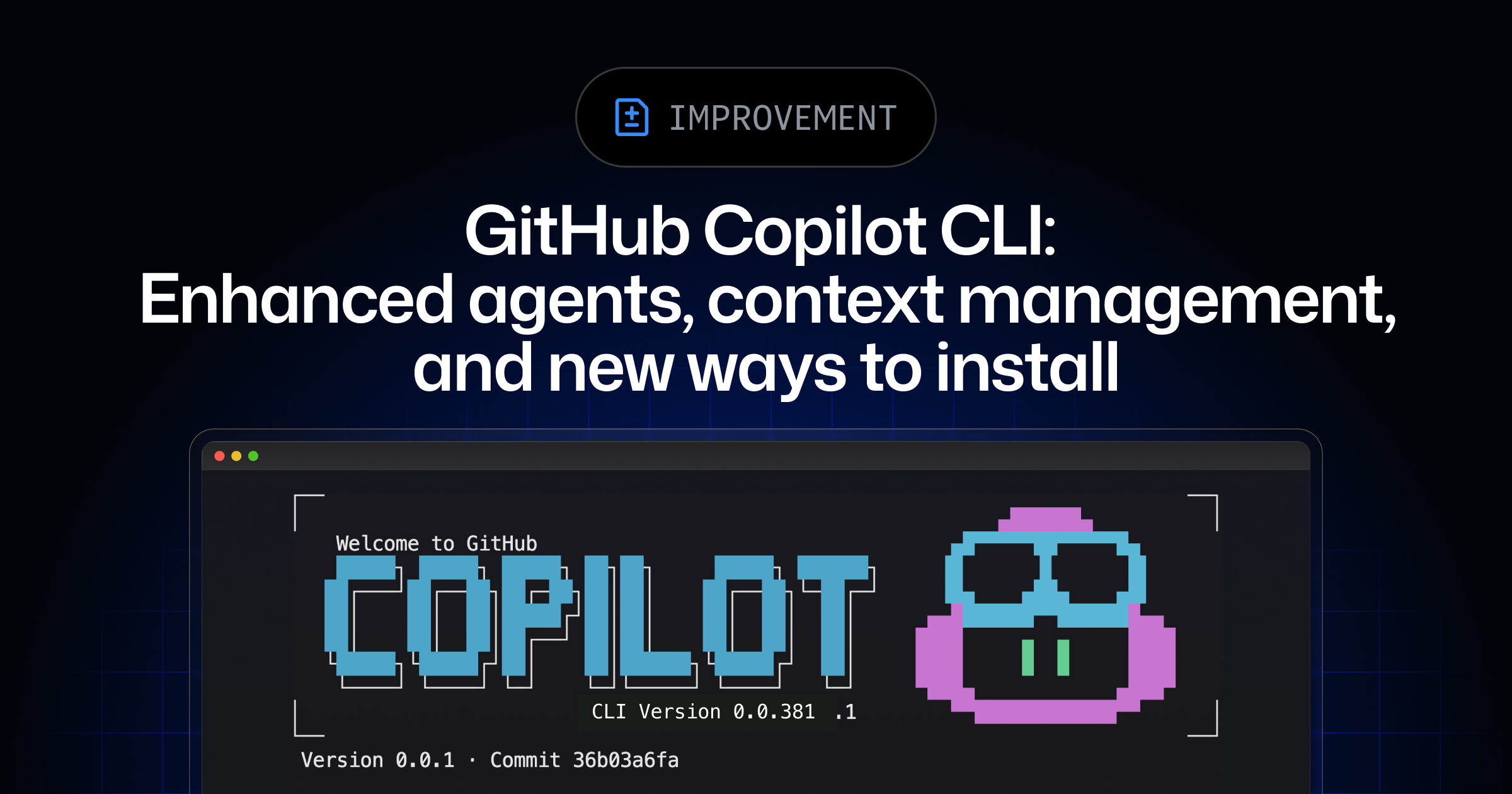
GitHub Copilot CLI: Enhanced agents, context management, and new ways to install - GitHub Changelog
As we wrapped up 2025 and rang in 2026, we’ve continued to deliver new ways of working with agents in GitHub Copilot CLI while improving the terminal-native experience for all…
Leer en el sitio original
What Google Cloud announced in AI this month – and how it helps you | Google Cloud Blog
Learn about the latest announcements, innovations, and guides when it comes to Google Cloud AI.
Leer en el sitio original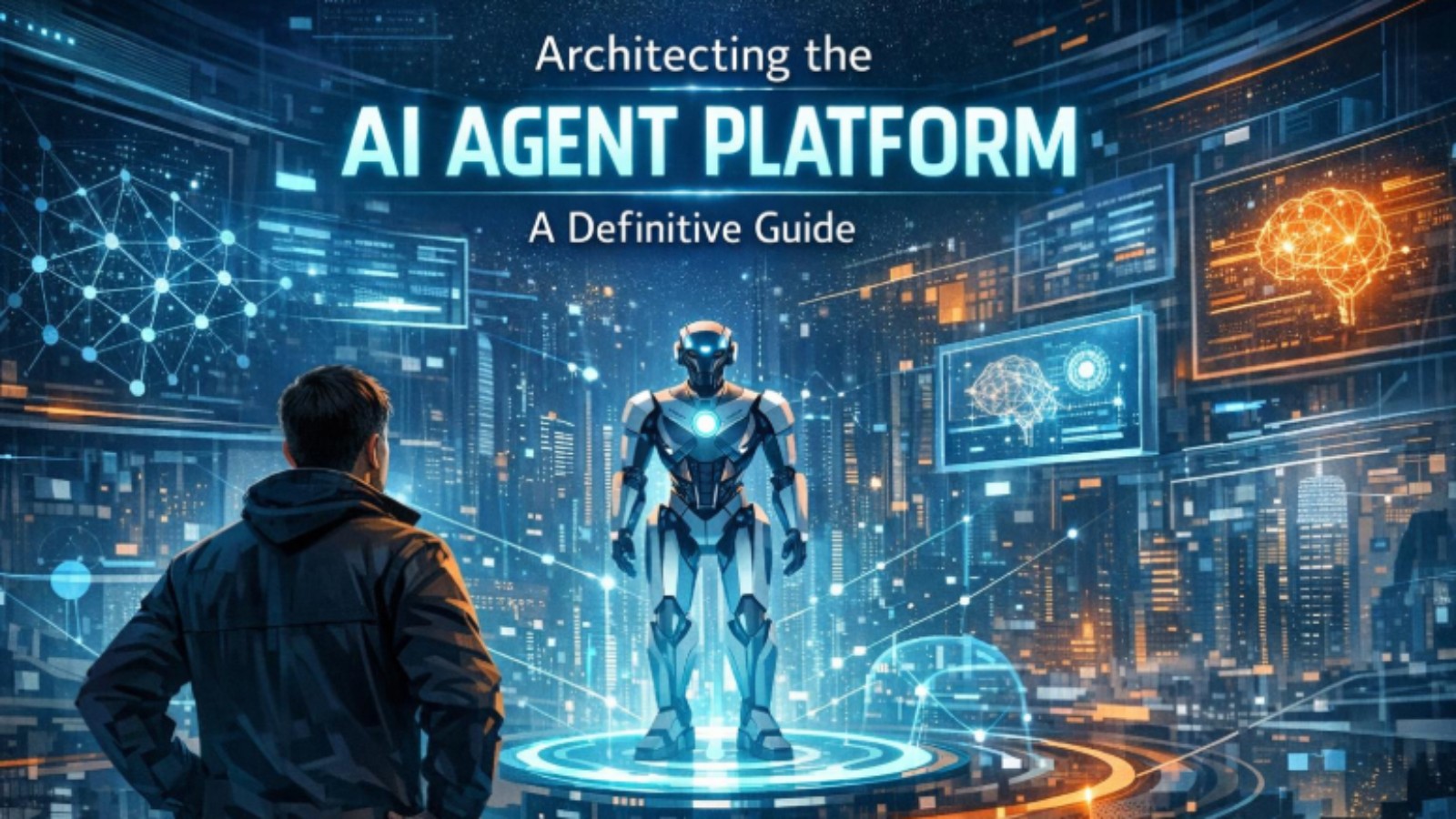
Architecting the AI Agent Platform: A Definitive Guide - Blog | Agentic AI Foundation
Generative AI has evolved at lightning speed from LLMs and RAG to autonomous AI agents capable of reasoning, planning, and acting. But creating a single agent is easy; managing thousands in an enterprise requires a full AI Agent Platform. This guide breaks down the architecture of a production-grade platform, covering layers like Interaction, Development, Core, Foundation, Information, Observability, and Trust. It shows how to build systems that are secure, scalable, and capable of delivering real business impact.
Leer en el sitio originalApply generative orchestration capabilities - Microsoft Copilot Studio
Understand the architecture, components, and best practices behind building orchestrated, multi‑agent Copilot Studio solutions.
Leer en el sitio originalKnowledge sources summary - Microsoft Copilot Studio
Learn how knowledge sources in Microsoft Copilot Studio enhance generative answers by integrating enterprise data, websites, and external systems.
Leer en el sitio original
New Enhanced Tool Governance in Vertex AI Agent Builder | Google Cloud Blog
With the integration of Cloud API Registry, you can manage your developers’ tools directly in the Vertex AI Agent Builder console.
Leer en el sitio original
Introducing GPT-5.2-Codex
GPT-5.2-Codex is OpenAI’s most advanced coding model, offering long-horizon reasoning, large-scale code transformations, and enhanced cybersecurity capabilities.
Leer en el sitio originalMCP-AI: Protocol-Driven Intelligence Framework for Autonomous Reasoning in Healthcare
Healthcare AI systems have historically faced challenges in merging contextual reasoning, long-term state management, and human-verifiable workflows into a cohesive framework. This paper introduces a completely innovative architecture and concept: combining the Model Context Protocol (MCP) with a specific clinical application, known as MCP-AI. This integration allows intelligent agents to reason over extended periods, collaborate securely, and adhere to authentic clinical logic, representing a significant shift away from traditional Clinical Decision Support Systems (CDSS) and prompt-based Large Language Models (LLMs). As healthcare systems become more complex, the need for autonomous, context-aware clinical reasoning frameworks has become urgent. We present MCP-AI, a novel architecture for explainable medical decision-making built upon the Model Context Protocol (MCP) a modular, executable specification for orchestrating generative and descriptive AI agents in real-time workflows. Each MCP file captures clinical objectives, patient context, reasoning state, and task logic, forming a reusable and auditable memory object. Unlike conventional CDSS or stateless prompt-based AI systems, MCP-AI supports adaptive, longitudinal, and collaborative reasoning across care settings. MCP-AI is validated through two use cases: (1) diagnostic modeling of Fragile X Syndrome with comorbid depression, and (2) remote coordination for Type 2 Diabetes and hypertension. In either scenario, the protocol facilitates physician-in-the-loop validation, streamlines clinical processes, and guarantees secure transitions of AI responsibilities between healthcare providers. The system connects with HL7/FHIR interfaces and adheres to regulatory standards, such as HIPAA and FDA SaMD guidelines. MCP-AI provides a scalable basis for interpretable, composable, and safety-oriented AI within upcoming clinical environments.
Leer en el sitio original
Top announcements of AWS re:Invent 2025 | Amazon Web Services
Discover our most impactful innovations across analytics, AI, compute, containers, security, and more throughout the conference week.
Leer en el sitio originalDonating the Model Context Protocol and establishing the Agentic AI Foundation
Anthropic is an AI safety and research company that's working to build reliable, interpretable, and steerable AI systems.
Leer en el sitio original
How to write a great agents.md: Lessons from over 2,500 repositories
Learn how to write effective agents.md files for GitHub Copilot with practical tips, real examples, and templates from analyzing 2,500+ repositories.
Leer en el sitio original
A new era of intelligence with Gemini 3
Today we’re releasing Gemini 3 – our most intelligent model that helps you bring any idea to life.
Leer en el sitio original
GPT-5.1: A smarter, more conversational ChatGPT
We’re upgrading the GPT-5 series with warmer, more capable models and new ways to customize ChatGPT’s tone and style. GPT-5.1 starts rolling out today to paid users.
Leer en el sitio original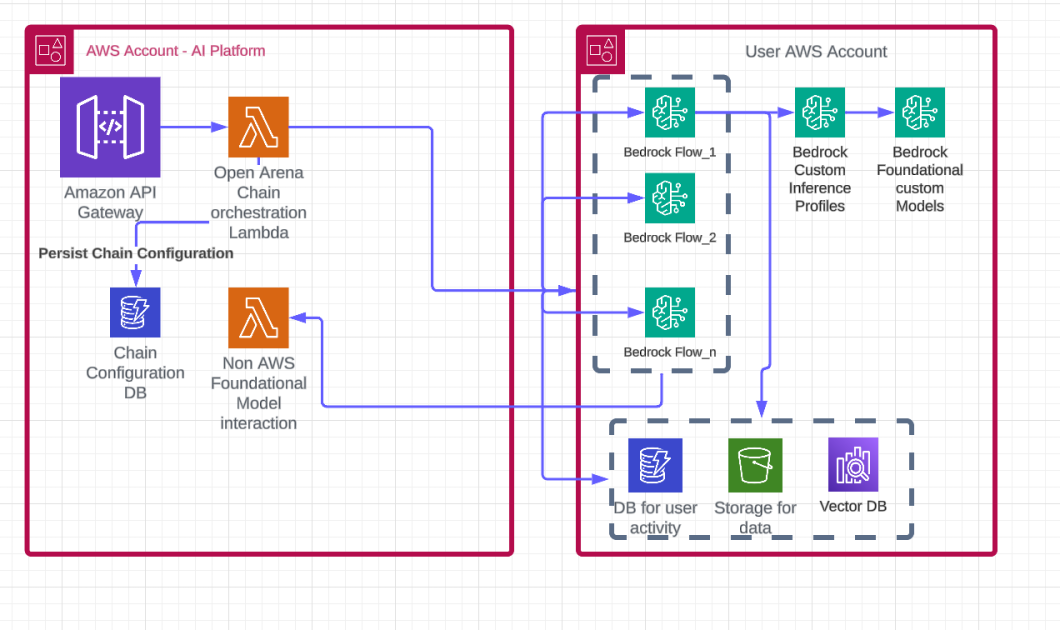
Democratizing AI: How Thomson Reuters Open Arena supports no-code AI for every professional with Amazon Bedrock | Amazon Web Services
In this blog post, we explore how TR addressed key business use cases with Open Arena, a highly scalable and flexible no-code AI solution powered by Amazon Bedrock and other AWS services such as Amazon OpenSearch Service, Amazon Simple Storage Service (Amazon S3), Amazon DynamoDB, and AWS Lambda. We
Leer en el sitio originalDisrupting the first reported AI-orchestrated cyber espionage campaign
A report describing an a highly sophisticated AI-led cyberattack
Leer en el sitio original
Custom agents for GitHub Copilot - GitHub Changelog
Custom agents for GitHub Copilot make it easy for users and organizations to specialize their Copilot coding agent (CCA) through simple, file-based configurations. By adding a configuration file under .github/agents…
Leer en el sitio originalBeyond Prompt Engineering: Neuro-Symbolic-Causal Architecture for Robust Multi-Objective AI Agents
Large language models show promise as autonomous decision-making agents, yet their deployment in high-stakes domains remains fraught with risk. Without architectural safeguards, LLM agents exhibit catastrophic brittleness: identical capabilities produce wildly different outcomes depending solely on prompt framing. We present Chimera, a neuro-symbolic-causal architecture that integrates three complementary components - an LLM strategist, a formally verified symbolic constraint engine, and a causal inference module for counterfactual reasoning. We benchmark Chimera against baseline architectures (LLM-only, LLM with symbolic constraints) across 52-week simulations in a realistic e-commerce environment featuring price elasticity, trust dynamics, and seasonal demand. Under organizational biases toward either volume or margin optimization, LLM-only agents fail catastrophically (total loss of \$99K in volume scenarios) or destroy brand trust (-48.6% in margin scenarios). Adding symbolic constraints prevents disasters but achieves only 43-87% of Chimera's profit. Chimera consistently delivers the highest returns (\$1.52M and \$1.96M respectively, some cases +\$2.2M) while improving brand trust (+1.8% and +10.8%, some cases +20.86%), demonstrating prompt-agnostic robustness. Our TLA+ formal verification proves zero constraint violations across all scenarios. These results establish that architectural design not prompt engineering determines the reliability of autonomous agents in production environments. We provide open-source implementations and interactive demonstrations for reproducibility.
Leer en el sitio original
Building Scalable AI Agents: Design Patterns With Agent Engine On Google Cloud | Google Cloud Blog
These blog posts provide explanations into Agentic AI and the technology behind it. It discusses use cases and architecture patterns for building scalable enterprise grade Agents on Google cloud.
Leer en el sitio original
Introducing AgentKit
Today, we’re releasing new tools to help developers go from prototype to production faster: AgentKit, expanded evals capabilities, and reinforcement fine-tuning for agents.
Leer en el sitio original
Introducing apps in ChatGPT and the new Apps SDK
We’re introducing a new generation of apps you can chat with, right inside ChatGPT. Developers can start building them today with the new Apps SDK, available in preview.
Leer en el sitio originalOpen Agent Specification (Agent Spec): A Unified Representation for AI Agents
The proliferation of agent frameworks has led to fragmentation in how agents are defined, executed, and evaluated. Existing systems differ in their abstractions, data flow semantics, and tool integrations, making it difficult to share or reproduce workflows. We introduce Open Agent Specification (Agent Spec), a declarative language that defines AI agents and agentic workflows in a way that is compatible across frameworks, promoting reusability, portability and interoperability of AI agents. Agent Spec defines a common set of components, control and data flow semantics, and schemas that allow an agent to be defined once and executed across different runtimes. Agent Spec also introduces a standardized Evaluation harness to assess agent behavior and agentic workflows across runtimes - analogous to how HELM and related harnesses standardized LLM evaluation - so that performance, robustness, and efficiency can be compared consistently across frameworks. We demonstrate this using four distinct runtimes (LangGraph, CrewAI, AutoGen, and WayFlow) evaluated over three different benchmarks (SimpleQA Verified, $τ^2$-Bench and BIRD-SQL). We provide accompanying toolsets: a Python SDK (PyAgentSpec), a reference runtime (WayFlow), and adapters for popular frameworks (e.g., LangGraph, AutoGen, CrewAI). Agent Spec bridges the gap between model-centric and agent-centric standardization & evaluation, laying the groundwork for reliable, reusable, and portable agentic systems.
Leer en el sitio original
Introducing upgrades to Codex
Codex just got faster, more reliable, and better at real-time collaboration and tackling tasks independently anywhere you develop—whether via the terminal, IDE, web, or even your phone.
Leer en el sitio original
GitHub Copilot coding agent 101: Getting started with agentic workflows on GitHub
Delegate it a task, and coding agent can independently write, run, and test code. Here’s how you can make the most of it.
Leer en el sitio original
Remote GitHub MCP Server is now generally available - GitHub Changelog
The remote GitHub MCP Server is now GA with OAuth 2.1 + PKCE support across Copilot IDEs, tool improvements, and hardened security features.
Leer en el sitio original
Building smarter interactions with MCP elicitation: From clunky tool calls to seamless user experiences
Explore how MCP elicitation transforms AI tool interactions by gathering missing information upfront, plus practical tips.
Leer en el sitio original
Spec-driven development with AI: Get started with a new open source toolkit
Developers can use their AI tool of choice for spec-driven development with this open source toolkit.
Leer en el sitio original
Gemini is now available anywhere | Google Cloud Blog
With Gemini on GDC, you can now leverage Google AI anywhere, while still controlling your sensitive data.
Leer en el sitio originalMCPToolBench++: A Large Scale AI Agent Model Context Protocol MCP Tool Use Benchmark
LLMs' capabilities are enhanced by using function calls to integrate various data sources or API results into the context window. Typical tools include search, web crawlers, maps, financial data, file systems, and browser usage, etc. Integrating these data sources or functions requires a standardized method. The Model Context Protocol (MCP) provides a standardized way to supply context to LLMs. However, the evaluation of LLMs and AI Agents' MCP tool use abilities suffer from several issues. First, there's a lack of comprehensive datasets or benchmarks to evaluate various MCP tools. Second, the diverse formats of response from MCP tool call execution further increase the difficulty of evaluation. Additionally, unlike existing tool-use benchmarks with high success rates in functions like programming and math functions, the success rate of real-world MCP tool is not guaranteed and varies across different MCP servers. Furthermore, the LLMs' context window also limits the number of available tools that can be called in a single run, because the textual descriptions of tool and the parameters have long token length for an LLM to process all at once. To help address the challenges of evaluating LLMs' performance on calling MCP tools, we propose MCPToolBench++, a large-scale, multi-domain AI Agent tool use benchmark. As of July 2025, this benchmark is build upon marketplace of over 4k MCP servers from more than 40 categories, collected from the MCP marketplaces and GitHub communities. The datasets consist of both single-step and multi-step tool calls across different categories. We evaluated SOTA LLMs with agentic abilities on this benchmark and reported the results.
Leer en el sitio original
Introducing GPT-5
We are introducing GPT‑5, our best AI system yet. GPT‑5 is a significant leap in intelligence over all our previous models, featuring state-of-the-art performance across coding, math, writing, health, visual perception, and more.
Leer en el sitio original
Introducing gpt-oss
We’re releasing gpt-oss-120b and gpt-oss-20b—two state-of-the-art open-weight language models that deliver strong real-world performance at low cost. Available under the flexible Apache 2.0 license, these models outperform similarly sized open models on reasoning tasks, demonstrate strong tool use capabilities, and are optimized for efficient deployment on consumer hardware.
Leer en el sitio originalOur framework for developing safe and trustworthy agents
Anthropic is an AI safety and research company that's working to build reliable, interpretable, and steerable AI systems.
Leer en el sitio original
Detecting and countering misuse of AI: August 2025
Anthropic's threat intelligence report on AI cybercrime and other abuses
Leer en el sitio original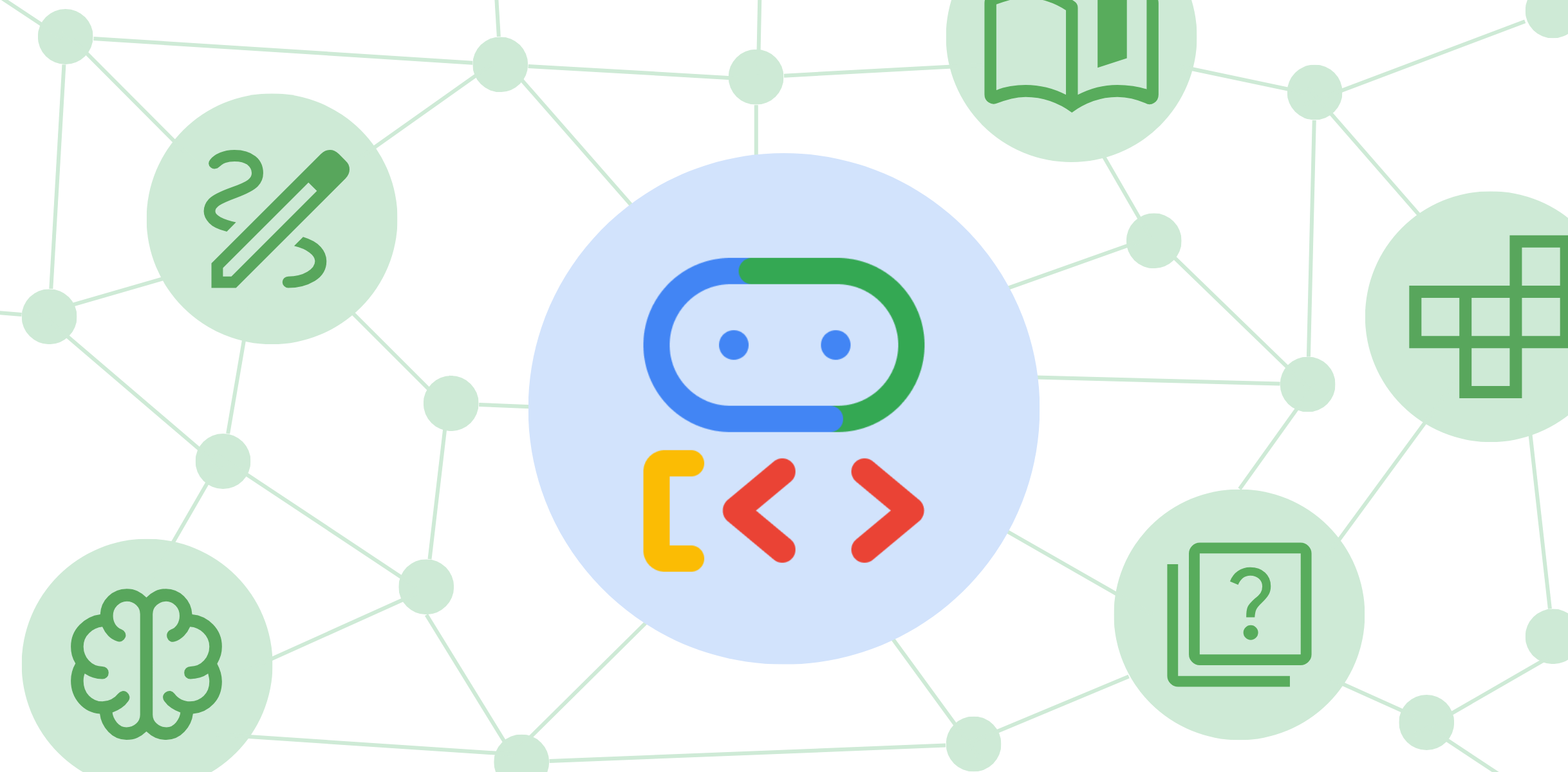
Remember this: Agent state and memory with ADK | Google Cloud Blog
Discover how Agent Development Kit (ADK) enables AI agents to remember information within and across user sessions through short-term state and long-term memory, enhancing personalization and contextual awareness. Explore ADK's session and memory storage options, including SQL databases and Vertex AI Agent Engine.
Leer en el sitio original
Agent2Agent protocol (A2A) is getting an upgrade | Google Cloud Blog
Google Cloud tools help developers build, deploy, and sell collaborative Agent2Agent (A2A) systems that solve complex problems seamlessly.
Leer en el sitio original
BigQuery meets Google ADK & MCP | Google Cloud Blog
Securely connect AI agents to BigQuery. Use ADK and MCP to simplify data access, reducing development overhead and risk. Check out the tutorial.
Leer en el sitio original
How to build secure and scalable remote MCP servers
More context can mean more attack surfaces for your projects. Be prepared for what lies ahead with this guide.
Leer en el sitio original
Introducing ChatGPT agent: bridging research and action
Introducing ChatGPT agent: it thinks and acts, using tools to complete tasks like research, bookings, and slideshows—all with your guidance.
Leer en el sitio original
Introducing Amazon Bedrock AgentCore: Securely deploy and operate AI agents at any scale (preview) | Amazon Web Services
Amazon Bedrock AgentCore enables rapid deployment and scaling of AI agents with enterprise-grade security. It provides memory management, identity controls, and tool integration—streamlining development while working with any open-source framework and foundation model.
Leer en el sitio originalModel Context Protocol (MCP) support in VS Code is generally available - GitHub Changelog
You can now use Model Context Protocol (MCP) with GitHub Copilot in VS Code in production environments. MCP enables GitHub Copilot to access external tools and data sources, making your…
Leer en el sitio original
Copilot coding agent now supports remote MCP servers - GitHub Changelog
With GitHub Copilot coding agent, you can now configure and use remote Model Context Protocol (MCP) servers to expand the agent’s context and its ability to interact with external systems.…
Leer en el sitio originalBuild multi-agentic systems using Google ADK | Google Cloud Blog
Learn how to build a simple multi-agentic system in just a few steps using Google’s ADK – Agent Development Kit.
Leer en el sitio originalGitHub - MoonshotAI/Kimi-K2: Kimi K2 is the large language model series developed by Moonshot AI team
Kimi K2 is the large language model series developed by Moonshot AI team - MoonshotAI/Kimi-K2
Leer en el sitio original
Context Engineering for AI Agents: Lessons from Building Manus
This post shares the local optima Manus arrived at through our own "SGD". If you're building your own AI agent, we hope these principles help you converge faster.
Leer en el sitio original
Structured data response with Amazon Bedrock: Prompt Engineering and Tool Use | Amazon Web Services
We demonstrate two methods for generating structured responses with Amazon Bedrock: Prompt Engineering and Tool Use with the Converse API. Prompt Engineering is flexible, works with Bedrock models (including those without Tool Use support), and handles various schema types (e.g., Open API schemas), making it a great starting point. Tool Use offers greater reliability, consistent results, seamless API integration, and runtime validation of JSON schema for enhanced control.
Leer en el sitio original
Build an agentic multimodal AI assistant with Amazon Nova and Amazon Bedrock Data Automation | Amazon Web Services
In this post, we demonstrate how agentic workflow patterns such as Retrieval Augmented Generation (RAG), multi-tool orchestration, and conditional routing with LangGraph enable end-to-end solutions that artificial intelligence and machine learning (AI/ML) developers and enterprise architects can adopt and extend. We walk through an example of a financial management AI assistant that can provide quantitative research and grounded financial advice by analyzing both the earnings call (audio) and the presentation slides (images), along with relevant financial data feeds.
Leer en el sitio originalGemini 2.5 Updates: Flash/Pro GA, SFT, Flash-Lite on Vertex AI | Google Cloud Blog
Latest Gemini 2.5 updates on Vertex AI: Flash & Pro GA for enterprises, SFT GA for custom AI, Flash-Lite Preview, & enhanced Live API for voice apps.
Leer en el sitio originalAgent mode is now generally available with MCP tools support in Visual Studio - GitHub Changelog
Copilot agent mode is on by default in Visual Studio. Agent mode helps you accomplish end-to-end development tasks by planning, taking action, and iterating until your goal is complete. Unlike traditional…
Leer en el sitio original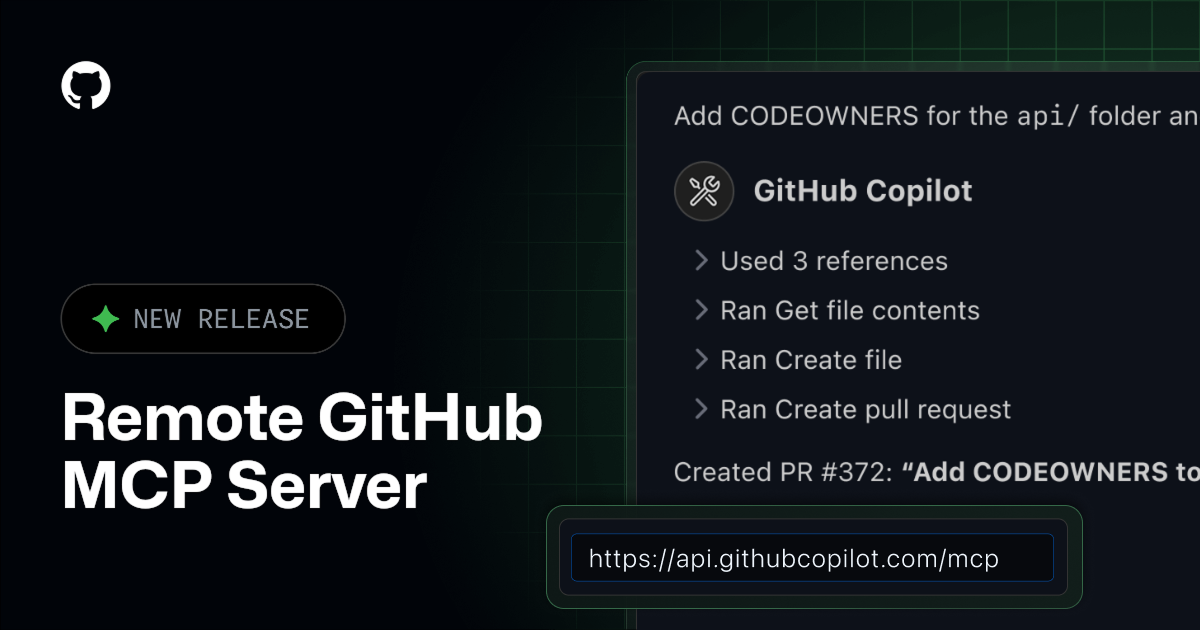
Remote GitHub MCP Server is now in public preview - GitHub Changelog
Connect AI agents to GitHub tools and context with OAuth, one-click setup, and automatic updates with GitHub’s hosted server.
Leer en el sitio original
Cloud CISO Perspectives: How Google secures AI Agents | Google Cloud Blog
To help mitigate potential agentic AI risks, we need to invest in a new field of study focused specifically on securing agent systems.
Leer en el sitio original
Microsoft Build 2025: The age of AI agents and building the open agentic web - The Official Microsoft Blog
TL;DR? Hear the news as an AI-generated audio overview made using Microsoft 365 Copilot. You can read the transcript here. We’ve entered the era of AI agents. Thanks to groundbreaking advancements in reasoning and memory, AI models are now more capable and efficient, and we’re seeing how AI systems can help us all solve...
Leer en el sitio original
Introducing Codex
Leer en el sitio original
Introducing OpenAI o3 and o4-mini
Our smartest and most capable models to date with full tool access
Leer en el sitio original
Introducing GPT-4.1 in the API
Introducing GPT-4.1 in the API—a new family of models with across-the-board improvements, including major gains in coding, instruction following, and long-context understanding. We’re also releasing our first nano model. Available to developers worldwide starting today.
Leer en el sitio original
Google Cloud Next 2025 Wrap Up | Google Cloud Blog
A whirlwind recap of Google Cloud Next '25, including a synopsis of over 200 product, customer and ecosystem announcements.
Leer en el sitio original
Gemini 2.5: Our most intelligent AI model
Gemini 2.5 is our most intelligent AI model, now with thinking.
Leer en el sitio original
New tools for building agents
Leer en el sitio original
Introducing GPT-4.5
We’re releasing a research preview of GPT‑4.5—our largest and best model for chat yet. GPT‑4.5 is a step forward in scaling up pre-training and post-training.
Leer en el sitio original
Introducing deep research
An agent that uses reasoning to synthesize large amounts of online information and complete multi-step research tasks for you. Available to Pro users today, Plus and Team next.
Leer en el sitio original
Introducing Operator
Leer en el sitio original
DeepSeek-R1 Release | DeepSeek API Docs
* ⚡ Performance on par with OpenAI-o1
Leer en el sitio original
Introducing Gemini 2.0: our new AI model for the agentic era
Today, we’re announcing Gemini 2.0, our most capable AI model yet.
Leer en el sitio original
Introducing Amazon Nova foundation models: Frontier intelligence and industry leading price performance | Amazon Web Services
Amazon Nova foundation models deliver frontier intelligence and industry leading price-performance, with support for text and multimodal intelligence, multimodal fine-tuning, and high-quality images and videos.
Leer en el sitio original
Ignite 2024: Why nearly 70% of the Fortune 500 now use Microsoft 365 Copilot - The Official Microsoft Blog
Two things can be true at the same time. In the case of AI, it is absolutely true that the industry is moving incredibly fast and evolving quickly. It’s also true that hundreds of thousands of customers are using Microsoft AI technology today and, by making early bets on the platform, are seeing big benefits...
Leer en el sitio original
Microsoft introduces new adapted AI models for industry - The Official Microsoft Blog
Across every industry, AI is creating a fundamental shift in what’s possible, enabling new use cases and driving business outcomes. While organizations around the world recognize the value and potential of AI, for AI to be truly effective it must be tailored to specific industry needs. Today, we’re announcing adapted AI models, expanding our industry...
Leer en el sitio original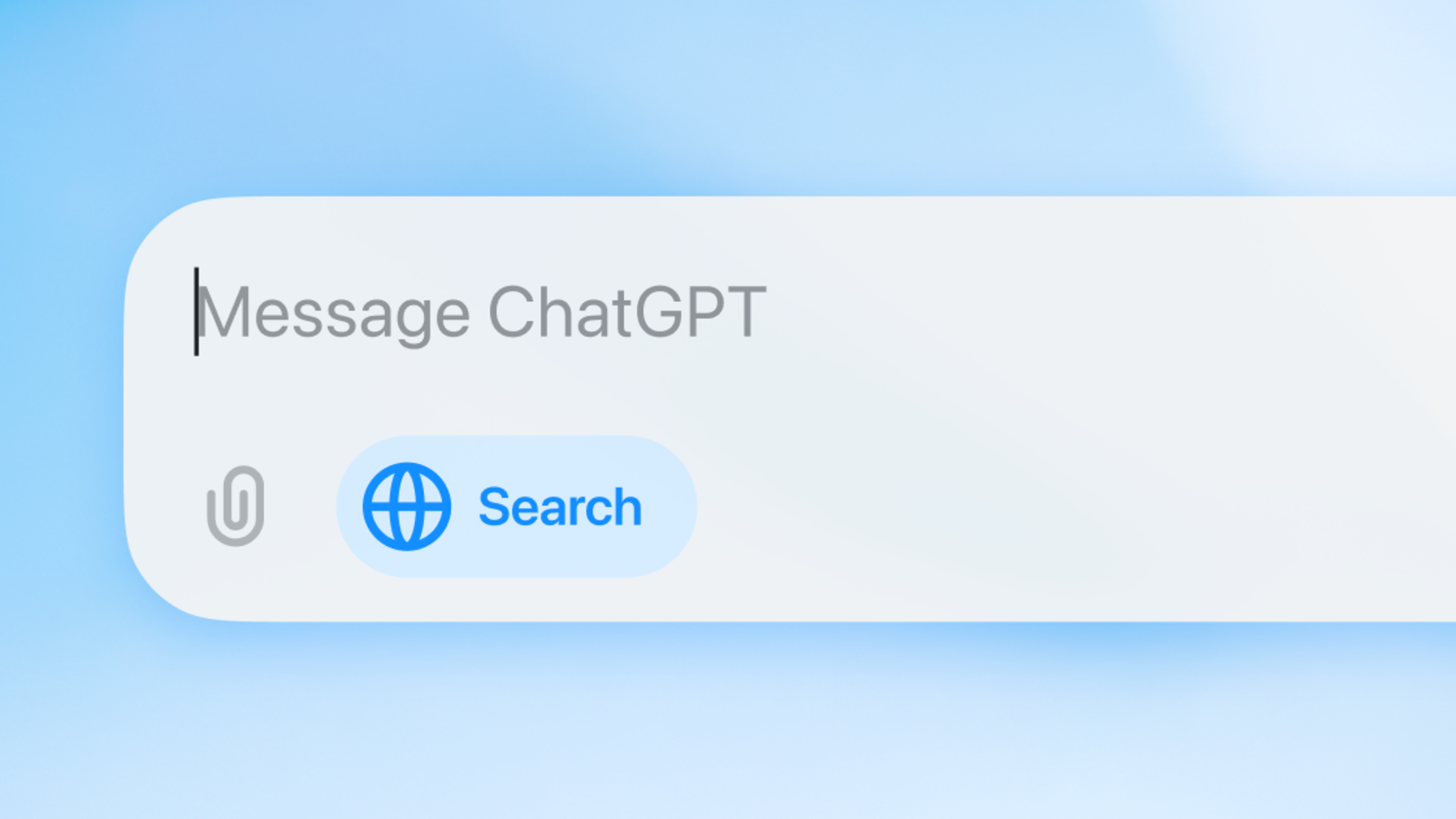
Introducing ChatGPT search
Get fast, timely answers with links to relevant web sources
Leer en el sitio original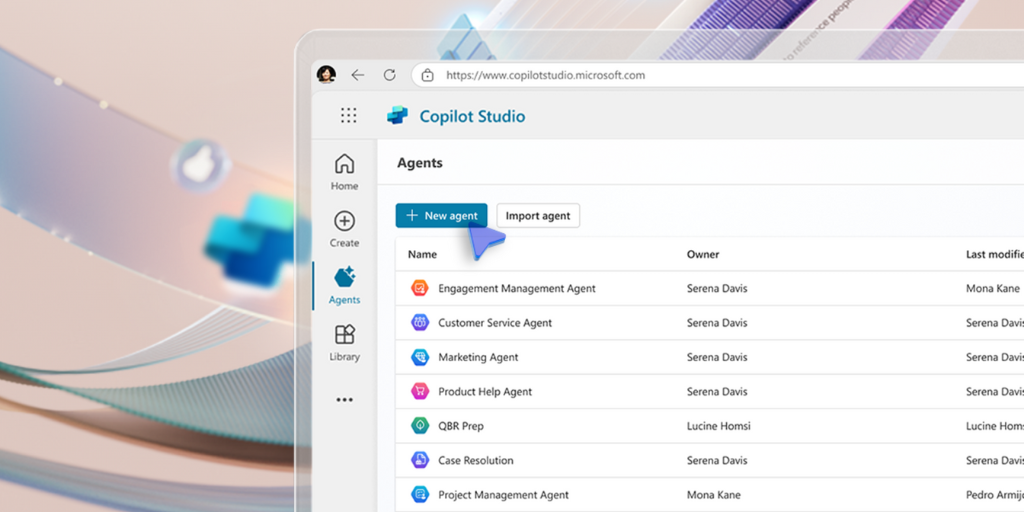
New autonomous agents scale your team like never before - The Official Microsoft Blog
Already, 60 percent of the Fortune 500 are using Microsoft 365 Copilot to accelerate business results and empower their teams. With Copilot supporting sales associates, Lumen Technologies projects $50 million dollars in savings annually. Honeywell(1) equates productivity gains to adding 187 full-time employees and Finastra is reducing creative production time from seven months to seven...
Leer en el sitio original
Microsoft Trustworthy AI: Unlocking human potential starts with trust - The Official Microsoft Blog
YouTube Video
Leer en el sitio original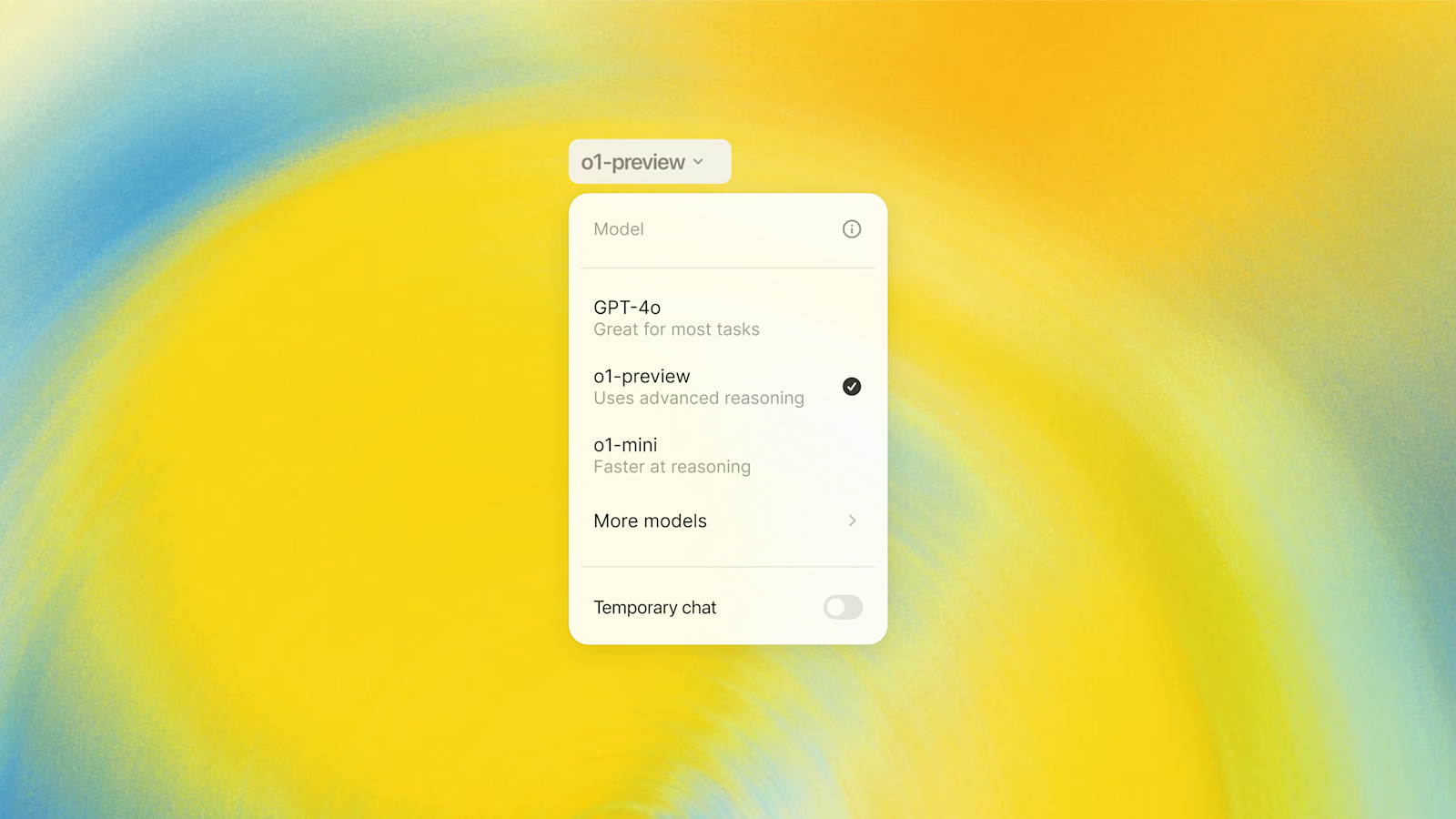
Introducing OpenAI o1
Leer en el sitio original
GPT-4o System Card
Leer en el sitio original
Amazon Titan Image Generator v2 is now available in Amazon Bedrock | Amazon Web Services
Amazon Titan Image Generator v2 provides unprecedented creative capabilities: image conditioning, color control, background removal, and subject preservation via fine-tuning for brand consistency.
Leer en el sitio original
GPT-4o mini: advancing cost-efficient intelligence
Leer en el sitio original
Announcing Dynamics 365 Contact Center - a Copilot-first cloud contact center to transform service experiences - The Official Microsoft Blog
Today we are thrilled to announce the latest milestone in our journey towards modernizing customer service: Microsoft Dynamics 365 Contact Center, a Copilot-first contact center solution that delivers generative AI to every customer engagement channel. With general availability on July 1, this standalone Contact Center as a Service (CCaaS) solution enables customers to maximize their...
Leer en el sitio original
Introducing Claude 3.5 Sonnet
Introducing Claude 3.5 Sonnet—our most intelligent model yet. Sonnet now outperforms competitor models and Claude 3 Opus on key evaluations, at twice the speed.
Leer en el sitio originalUsamos sus datos solo para entregar aquello a lo que se suscribió. Sin venta de listas, sin spam de terceros. Vea la Política de Privacidad. Privacidad